Rendering Carlton
Render Recolouring Carlton | Compatible Coatings
Changing the colour of existing render can refresh a house without replacing a sound surface. It still requires more than choosing a shade and arranging a spray machine. Render recolouring in Carlton should establish what the existing finish is, how securely it is attached and which coating is compatible. Preparation, repairs and protection determine whether the project is ready for decoration at all.

On this page
Check whether the surface needs colour or repair
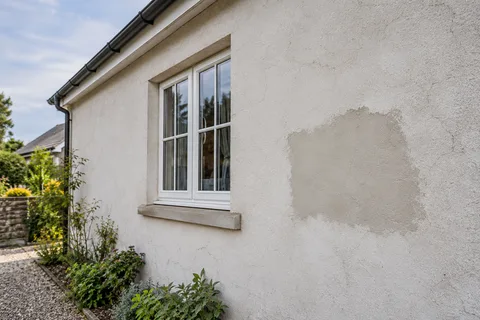
Begin by separating cosmetic concerns from defects. Fading, an unwanted shade and small marks do not necessarily mean the render must be removed. Loose patches, ongoing cracking or water getting behind the finish need a different assessment. A coating should not be sold as a substitute for repairing a defective background. The owner should know which findings affect the recolouring proposal before a finish is selected.
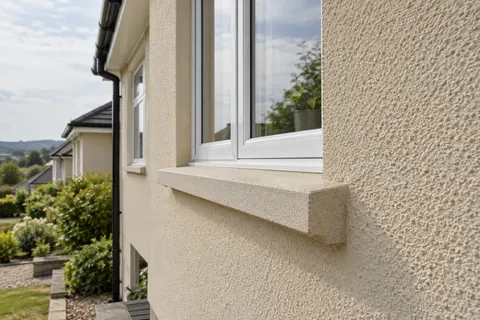
If the condition is uncertain, the repair page explains the information to collect. Where a rough surface is sound but visually unpopular, compare coating with pebbledash removal as distinct options. Coating generally follows the existing texture rather than turning coarse material into a smooth facade. Removal and replacement involve a different scope, including investigation of the masonry below.
- Clean Washed down, with algae and mould treated and left to work.
- Repair first Cracks and hollow patches are repaired before any coating.
- Prime or stabilise Where the coating maker requires it on that surface.
- Coating Usually two coats of a breathable masonry or silicone coating.
The usual order of work. The survey and the chosen products decide the actual steps.
Identify the previous finish and any earlier paint
Product records are useful, but they may not exist for an older wall. The survey should establish what can be identified and what testing or technical advice is needed. An old paint layer may be poorly attached even where the render below is sound. Specifying a new coating without considering that layer can leave the new work dependent on the weakest retained material.
Ask the proposed coating supplier or competent specifier to confirm compatibility with the background and any preparatory products. A general claim that a paint is suitable for exterior use does not answer that question. On a lime-rendered building, compatibility deserves particular attention; consult the lime-rendering guide before treating the wall as a conventional painted modern facade.
Cleaning should prepare the wall without damaging it
The cleaning method should suit the substrate, existing finish and contamination. A powerful machine is not automatically the best preparation. Aggressive treatment can damage a surface or force water into vulnerable details. The contractor should explain the intended method, any trial area and how the wall will be assessed before the next stage proceeds.
If growth or staining returns repeatedly in one location, investigate the source rather than treating cleaning as the complete answer. Leaking rainwater fittings, poorly resolved projections or persistent shaded wetting may be relevant to the inspection. The roof-water article distinguishes observations from diagnoses and explains why the same mark should not be covered repeatedly without asking what causes it.

| Check | Reason |
|---|---|
| Existing layers identified | New coating must suit what remains |
| Defects addressed | Colour cannot restore detached material |
| Trial approved | Texture and lighting affect appearance |
| Protection planned | Adjacent surfaces and normal access need consideration |
Approve the colour on the building
View a suitable trial in the position where it will be used. Retained brick, window frames, roof tiles and neighbouring colours can change how a shade appears. Compare a shaded view with one in direct light, and step back far enough to judge the wall as part of the building. A sample seen only indoors can give a misleading impression of the final exterior.
Record the product, colour reference and sheen or finish designation where relevant. A verbal description such as warm white leaves room for misunderstanding. The article on render samples in changing light gives a practical way to make the comparison. A digital mock-up can help explore combinations, but it should not replace approval of the actual coating and texture on a representative surface.
Define exactly which surfaces are included
A frontage may contain render, painted trim, metal fittings, exposed brick and previously coated stone. Do not assume one product or preparation suits all of them. Mark the surfaces to be recoloured and the ones to remain untouched. Include returns and areas behind pipes so the scope is clear when those fittings are removed or repositioned.
Edges around doors, frames and roof components need careful protection and a suitable finishing method. Spray application is one possible method, not a guarantee that every part of the job should be sprayed. The contractor should choose the technique appropriate to the coating and surroundings. An owner needs to understand the result and protection included, without prescribing an application method that may be unsuitable for the setting.
Protect neighbouring surfaces and normal use
Discuss windows, parked vehicles, planting, paths and adjoining property before application. The working method must account for surrounding surfaces and prevailing conditions. Where the home remains occupied, agree how entrances and ventilation requirements are managed during the work. For commercial premises, staff and customers may need a separate arrangement, covered in the commercial rendering guide.
Access should allow the surface to be prepared and coated consistently, including difficult corners and high returns. If scaffold or another working platform is required, include it in the project comparison. A low headline decoration price may assume access is provided by somebody else. Ask who arranges it, when it is needed and whether it remains available for inspection and any agreed finishing work.
Do repairs before approving the final coating stage
Any necessary repairs should be completed with suitable materials and allowed to reach the condition required by the coating specification. A repaired patch may have a different texture or absorbency from the existing surface, so preparation needs to account for that. The proposed coating may unify colour without making every change in surface relief disappear.
Set an inspection point after cleaning and repairs if the background condition is a significant uncertainty. That allows the owner to see what has been addressed and understand any revised scope. If extensive defects make recolouring unsuitable, the alternatives should be explained before coating proceeds. Wall replacement or a wider house-rendering scheme may then be relevant, but neither should be assumed automatically.
Leave useful maintenance information
Keep the coating name, colour code and instructions for cleaning or later recoating. Ask which materials were used on repaired areas and retain photographs where possible. If the finish is damaged by a later fitting or alteration, those records help a future contractor assess the repair. They also avoid having to guess the original colour from a weathered sample.
Recolouring does not remove the need to maintain gutters, seals and other exterior components. Treat a returning local mark as a reason to inspect the adjacent detail, rather than automatically ordering another coat. The Rendering Carlton homepage links the repair, finish and insulation services so that future work can be chosen according to the condition of the wall, with the existing coating correctly identified.
Common questions
Does spraying make rough render smooth?
A decorative coating generally follows the surface relief beneath it. If the intention is a smooth-looking replacement for coarse pebbledash, compare removal and a suitable new finish rather than expecting a colour coating to eliminate the existing texture.
Can a new coating be applied straight after cleaning?
The next stage depends on the product requirements and the condition of the prepared background. The contractor should establish when it is suitable. A fixed waiting period borrowed from another coating or another wall is not a universal instruction.
See housing and planning information for Carlton and nearby places, including the source and geography behind each figure.